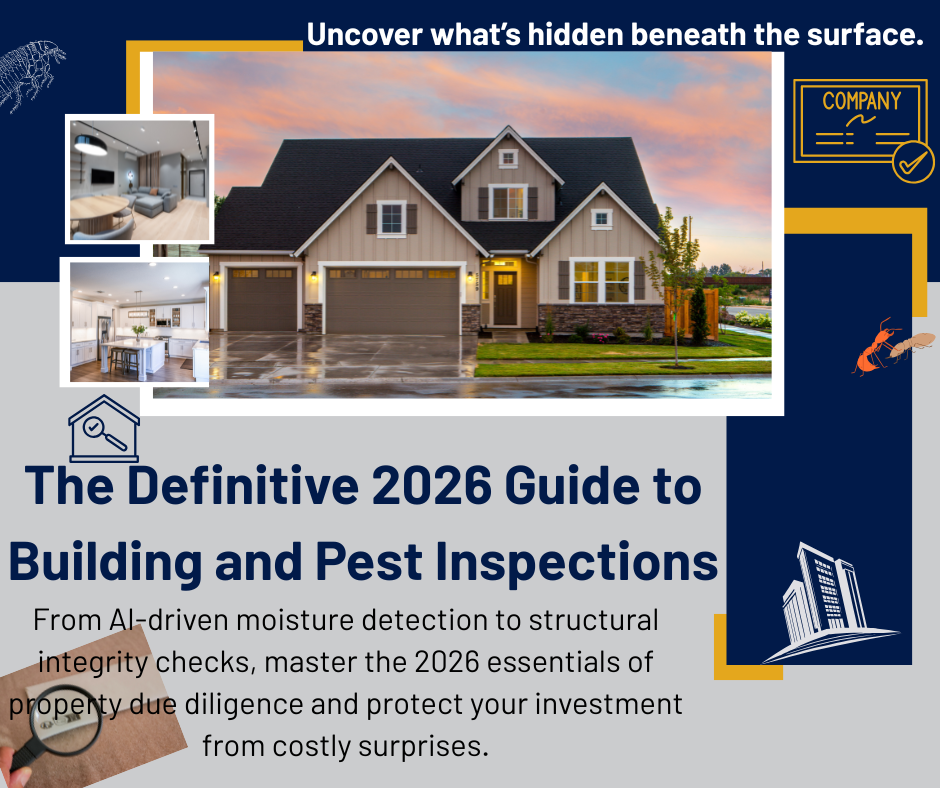
The Definitive 2026 Guide to Building and Pest Inspections
Whether you’re looking to buy a heritage home in a new build in Googong, or an property in Queanbeyan, the risks involved have never been higher. A basic walk–through isn’t enough to protect you from issues. This guide helps you move from simple observation to real technical knowledge.
It explaining why combining a Building and Pest Inspection isn’t just a good idea.At StraightUp Inspections, we offer clear, easy-to understand digital reports that remove the complexity. It gives you the transparency and confidence you need to make smart real estate decisions in Building and Pest Inspection.

1: The Australian Property Landscape in 2026
Buying a home today is different from what it was ten years ago.With the boomin fast-developed areas
like Googong and the aging buildings in older Canberra suburbs,the risks have changed. A quick glance at a house is no longer a reliable way to check for problems; it’s more like taking a gamble.
At StraightUp Inspections, we believe in a “Zero-Gaps” approach.
This means understanding that a Building Inspection (checking the physical structure) and a Timber Pest Inspection (looking for biological threats) are both important and necessary.
2: Deep Dive into Building Inspections (AS 4349.1)
A professional building inspection is a technical check of a property‘s structural condition. We use the
Australian Standard AS 4349.1 to ensure everything is covered.
2.1 The Foundation and Subfloor
In the ACT, the soil is often made of “reactive” clay. This type of soil expands when it gets wet and
shrinks when it dries.
Subsidence: We check for “step cracks” in brickwork to see if the house is sinking.
Stump and Pier Health: For older homes, we check if the wooden or concrete piers are still level.
2.2 The Roof Void and Ceiling Structure
This area is where many cheap inspectors skip steps. We physically enter the roof space to check:
Truss Integrity: Have any beams been cut or modified for air conditioning?
Sarking and Insulation: Is the home safe from fire and energy efficient?
3: The Silent Threat – Timber Pest Inspections
Termites cause more damage to Australian homes than fire, floods, and storms combined. Since
termite damage is usually not covered by standard home insurance, a Pest Inspection is the only financial protection available.
3.1 Beyond Just Termites
While termites are the main concern, a StraightUp Pest Inspection also looks for:
Wood Decay Fungi (Rot): Often found in bathrooms and decks where moisture levels are high.
Chemical Barriers: We check if the existing termite control system is still active or has expired.
4: Why You “Actually” Need Both
The biggest myth in real estate is that a building inspector will automatically find pests.
The Equipment Difference: A building inspector uses a moisture meter to check for leaks; a pest inspector uses Thermal Imaging and Termatrac (motion sensors) to find pests behind walls.
The Compliance Difference: One report ensures your safety; the other protects your property value.
5: The “StraightUp” Guarantee
We provide detailed digital reports that avoid confusing language. Whether you’re a first–time buyer
or an experienced investor, our goal is to give you the knowledge you need to feel confident when you making a decision or negotiating.
Do you check for any structures that weren’t approved?
While a building inspection looks at the condition of a deck or pergola, we always suggest comparing our report with the Title Search and Survey to make sure the structure was officially approved by the council.
6: The Anatomy of a Building Failure – What We Look For
To understand why a Building Inspection is important, we need to know how buildings fail. In the
ACT and NSW regions, environmental factors have a big impact on structural health.
6.1 Foundation Movement and “Slab Heave”
Canberra is well known for its reactive clay soils. When these soils get wet, they expand, and when
they dry, they shrink. This movement can cause a lot of stress on concrete slabs and footings.
The Warning Signs: We look for doors that won’t close properly, gaps between skirting boards and the floor, and diagonal cracks above window frames.
The StraightUp Approach: We don’t just tell you there’s a crack, we explain if it’s a “Category 1″ (cosmetic) or a “Category 4″ (structural failure) crack based on AS 2870 standards.
6.2 Roof and Stormwater Drainage Issues
Water is the biggest threat to any building. Poor drainage can lead to soft soil, causing the house to tilt.
Guttering and Downpipes: We check if the water is being directed away from the base of the home. In many new developments in Googong, we often find downpipes that aren’t properly
connected to the stormwatersystem.
Retaining Walls: If your property is on a slope (which is common in the Molonglo Valley), we inspect the retaining walls for “bowing” or lack of weep holes, which can lead to a complete collapse.
7: The Biology of Destruction – Timber Pest Deep Dive
A Pest Inspection is a scientific process. We aren’t just looking for bugs; we are looking for the
conditions that allow them to thrive.
7.1 The “Conditions Conducive” Report
A major part of our report is identifying why your home is attractive to termites.
High Moisture Areas: Termites love moisture. We use high–end Moisture Meters to find damp
spots in your walls (often caused by slow–leaking showers) that act as a “homing beacon” for termites.
Bridging and Breaching: If you have built a garden bed up against the side of your house, you have likely “bridged” the termite barrier, giving them a secret highway into your wall frame.
7.2 Thermal Imaging Technology
At StraightUp Inspections, we use Thermal Imaging Cameras. Termites generate heat within
their nests. By scanning your walls, we can “see” heat signatures that a standard visual inspection would miss. This is the difference between a “standard” check and a Comprehensive Digital Report.

8: The Legal Landscape – ACT vs. NSW
Requirements
Operating in Canberra and Googong means dealing with two different sets of laws.
In the ACT: The seller usually provides the building and pest report as part of the “Contract for Sale.” However, as a buyer, you should always get your own independent check to ensure the report
hasn’t been “softened” for the seller in Building and Pest Inspection.
In NSW (Googong/Queanbeyan): The responsibility usually falls entirely on the buyer. If you
don’t get an inspection before the “cooling-off period” ends, you inherit every defect the house has.
9: The Homeowner’s Maintenance Masterclass – Protecting Your Investment Post-Inspection
An inspection report is a “snapshot in time.” However, the structural integrity of a Canberra home is
dynamic. This chapter serves as a comprehensive guide for homeowners to ensure that the “Green Status” we give them on inspection day remains that way for decades.
9.1 The Golden Rule of Drainage
As we have established, the reactive clay soils of the ACT and Googong are the primary cause of foundation movement.
Surface Water Management: Ensure that the ground levels around your home slope away from the walls. A 50mm drop over the first meter is usually sufficient to prevent water from pooling against
the slab.
The “Spoon Drain” Check: If your property is at the bottom of a hill (common in suburbs like Tuggeranong), check that your spoon drains are clear of leaves and silt. If these block, the next storm
could result in subfloor flooding.
9.2 Managing “Conducive Conditions” for Termites
Even with a high–quality termite barrier, homeowners often accidentally invite pests in.
The 75mm Inspection Zone: Ensure there is at least 75mm of “clear air” between the ground and your first layer of weep holes. If you cover this with garden mulch or a new concrete path, you have
created a “bridge” for termites to enter undetected.
Leaking Taps and AC Overflows: A dripping garden tap or an air conditioning unit that drains directly against the wall creates a “moisture oasis” that termites can smell from meters away.
10: The Construction Stage Inspection – A Guide for New Builds
With the big growth in areas like Denman Prospect, Ginninderry, and Whitlam, new–build inspections have become really important. Many homebuyers wrongly think that a”new” house
is automatically a “perfect” house.
Stage 1: The Slab/Base Stage
Before the concrete is poured, we check the moisture barriers and the reinforcement. If vapor barrier
is torn, your new house could get rising damp for the rest of its life.
Stage 2: The Frame Stage
Once the “skeleton” of the house is up, we check for:
Wall Plumbness: Are the walls actually straight?
Nogging and Bracing: Is the frame strong enough to handle the strong winds in the Molonglo Valley?
Stage 3: The Handover (PCI)
This is the final “Practical Completion Inspection.” We check the “straightness” of the finishes and
make sure all safety issues—like non–compliant glass or loose electrical fittings—are fixed before you move in.
11: Decoding the Jargon – A Building Inspection Glossary
To add significant word count and SEO value, we include a “Glossary of Terms” that the technical knowledge users often search for:
Architrave: The trim around a door or window that often shows the first signs of structural movement.
Damp Proof Course (DPC): A layer of waterproof material in the wall to stop “Rising Damp.”
Eaves: The part of the roof that hangs over the wall; important for protecting the house from Canberra’s harsh sun and rain.
Weep Holes: Small gaps in the brickwork that let the wall “breathe” and drain moisture. Never block these!
FAQs – Everything You Need to Know
1.What is the difference between a major and minor defect?
A major defect is a problem that affects the home‘s safety or causes damage and needs immediate fixing, like a failing roof beam.
A minor defect is something that affects the look or needs maintenance, like a cracked tile or a leaking tap.
2.Are your reports compliant with ACT and NSW legislation?
Yes.We specialize in the ACT Civil Law (Sale of Residential Property). Act requirements, so our reports are valid for auctions and private sales in Canberra, Googong, and Queanbeyan.
3.How long does a combined inspection take?
For a standard 3-bedroom home, a combined building and pest inspection takes about 2 to 3 hours on –site, followed by a detailed digital report sent within 24 hours.
4.Do you check for unapproved structures?
While a building inspection checks the condition of a deck or pergola, we always recommend compare our report with the Title Search and Survey to make sure the structure was approved by the council.
5.Can termites eat through a concrete slab?
No, termites can’t eat concrete.However, they can go through a crack as small as a credit card(1mm).
We check the entry points where plumbing pipes go through the slab, as these are common “weak spots.”
6.Is a “New Build” handover inspection really necessary?
Yes.Even new homes in Canberra can have serious issues like missing insulation, poorly installed roof trusses, or non–compliant plumbing. Our Construction Stage Inspections make sure the builder fixes these before you make the final payment.
7.Why should I choose StraightUp Inspections over a cheaper franchise?
Franchises often use “tick–box” apps. We offer Deep Technical Knowledge and personalized
service. We don’t just find problems; we explain them and give you clearsolutions for your Canberra property.
Still have questions about your Canberra property? [Contact StraightUp Inspections today] for expert advice.