
12 September 2026 · News
Damp and Water Damage in Canberra Homes: What to Check Before Buying
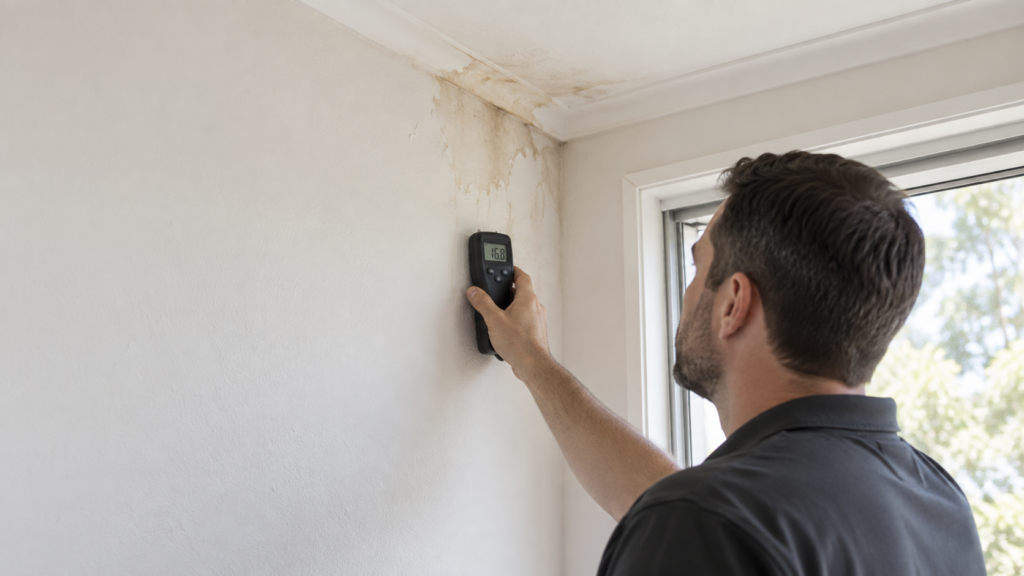
A freshly painted room can look ready to move into. A faint ceiling stain or damp cupboard may tell a different story.
If you are looking for signs of water damage in Canberra homes, start by noting where the problem appears, asking about previous repairs and arranging an inspection before making your purchase decision. A mark alone cannot tell you whether a problem is old, active or fully repaired.
This guide will help you ask better questions at your next viewing and understand when further investigation is needed.
Is it condensation, a leak or another damp problem?
These terms describe different moisture problems. Understanding the distinction helps you ask the right questions.
Condensation forms when humid air meets a surface cold enough for water droplets to develop. It can appear on windows and other surfaces, or occur inside building cavities. Cooking, showering and drying clothes indoors add moisture to the air. The risk depends on the climate, construction and how the home is used. The Australian Government’s Your Home guide to condensation explains why ventilation, insulation and moisture management need to work together.
Leaks and ground-related damp have different causes. Water may enter through roof or flashing defects, leaking plumbing or damaged shower waterproofing. Underfloor moisture can also relate to drainage and ventilation. Identifying the source matters because each problem needs a different response. See the government’s repairs and maintenance guidance.
For a buyer, the useful question is: what caused the moisture, and what evidence shows it has been addressed?
Five moisture warning signs worth asking about
Use the following prompts during a viewing. Record what you notice and pass your concerns to the inspector.
1. Marks on ceilings or around windows
Photograph visible staining with the agent’s permission. Ask when it first appeared, whether it changes after rain and whether any repairs have been completed.
A useful follow-up question is: “Was the source repaired, or was the affected surface repainted?”
2. Mould or recurring discolouration
Mould grows best in damp, poorly ventilated areas. The ACT Government’s mould guidance recommends controlling moisture, fixing leaks and building faults, and improving ventilation. It recommends professional remediation advice for large areas or recurring growth.
Ask whether mould has returned after cleaning and what was done about the underlying moisture. Avoid treating a recently cleaned surface as proof that the cause has been resolved.
3. Visible changes around bathrooms and laundries
Point out damaged finishes or staining beside showers, behind accessible cupboards and on adjoining walls. Ask about bathroom renovations and any history of leakage.
Shower waterproofing can leak when it is inadequate or damaged, according to Your Home’s maintenance guidance. Ask the inspector whether the observations justify further assessment by a qualified tradesperson.
4. Water collecting near the building
If you notice ponding, leaking gutters or visible damp near the base of the house, flag it for inspection.
Your Home recommends checking gutters for leaks, monitoring subfloor dampness and addressing drainage or ventilation problems with appropriate advice. Its maintenance guidance provides further detail.
5. Persistent moisture on windows
Ask whether wet windows are occasional or persistent, which rooms are affected and how moisture is managed after showering or cooking.
Condensation can affect both older and newer homes. Its presence deserves context rather than an automatic assumption that the roof leaks. The Your Home condensation guide explains the relationship between indoor moisture and cold surfaces.
Questions to send the seller or agent
Before your inspection, request any available information about the areas that concern you:
- When was the problem first noticed?
- Does it recur after rain or after using a bathroom?
- Who investigated the cause?
- What work was completed, and when?
- Are invoices, photographs or repair reports available?
- Has the area been checked since the work was finished?
Specific records are more useful than a general assurance that “it has been fixed”. Share the answers with your inspector so they can consider them alongside the visible condition.
For recently updated properties, also read our guide to warning signs in renovated Canberra homes.
What can a pre-purchase building inspection check?
StraightUp’s pre-purchase building inspections in Canberra generally cover accessible roof areas, subfloors, interiors, wet areas and site drainage. The scope depends on the agreement and safe access on the day.
The report includes photographs and practical recommendations. Concealed or inaccessible areas are excluded and recorded as limitations. A visual inspection therefore cannot establish the condition of every hidden surface or component.
Tell the team about any stains, previous leaks or repair records when booking. Ask whether further specialist investigation is recommended for the particular concern.
What should you do if the report identifies moisture?
Ask the inspector to explain three things:
- The finding: What was observed, and where?
- The uncertainty: Is the source established, suspected or still unknown?
- The next step: What investigation or repair advice is recommended?
If further work is recommended, obtain a suitable assessment and written quote before assuming the problem will be inexpensive to resolve. Keep the inspection findings, proposed repair scope and any outstanding questions together when reviewing the property.
You can also read our guide to understanding a building inspection report.
Frequently asked questions
Does a ceiling stain prove there is an active leak?
No. Record the stain, ask about its history and have it assessed. Avoid assuming that either a visible mark or a fresh coat of paint establishes the current condition.
Can a new home have condensation?
Yes. Condensation can affect new and older buildings. Construction details, indoor moisture and ventilation all influence the risk. Your Home explains these factors.
Should I request an inspection if repairs were already completed?
If you remain concerned, share the repair records and ask for the affected area to be assessed within the agreed inspection scope. Explain what you want clarified before booking.
Get clarity before you buy
Buying a Canberra property with signs of damp or previous water damage? Give StraightUp Inspections the suburb, your concerns and any purchase deadline.
Our licensed builders provide independent inspections with clear findings, photographs and practical advice. Confirm the scope, fee and expected report delivery when booking.
Request a pre-purchase inspection quote or call 0423 476 649.