Selling a home in Canberra or Googong is a big decision. Whether you’re a homeowner or someone selling a property, the building inspection report is often the key moment that decides whether the sale goes through. A good report can lead to a great sale price, but a bad one could result in buyers backing out or even another buyer getting in before you.
This 2026 guide covers everything you need to know how to make prepared your property for a building inspection in Canberra or ACT. And make sure that your property passes inspection with ease.

1: Understanding Why Building Inspections Matter
A building inspection isn’t just a step you have to go through—it’s a way to be honest and transparent.
In the ACT and NSW areas, buyers are getting knowledgeable about problems like slab heave, termite damage, and illegal DIY work.
For Sellers: Doing an inspection before you sell helps you find issues before they become reasons for buyers to negotiate more.
For Buyers: It helps them feel confident that the home is safe and built properly.
2: Preparing the Outside: Making a Good First Impression
The inspector starts by looking at the outside. If the exterior looks messy, they’ll look harder for
hidden issues inside.
Roof and Gutters
Clear Gutters: If gutters are full of debris, water can overflow and cause problems like rot and dampness.
Check Roof Tiles: Replace any cracked or loose tiles. Even a small leak can be seen as a big problem
by thermal imaging.
Downpipe Redirect: Make sure all downpipes direct water away from the house‘s base to stop the soil from getting too wet.
Walls and Foundations
Clear Vegetation: Cut back bushes and trees near walls. Roots can damage the foundation, and
dense plants can hide signs of termite activity.
Soil Levels: Keep the soil at least 75mm below the weep holes (small gaps in brickwork).
If the soil is too high, it can create a path for termites to travel.
3: Interior Checklist: Precision Matters
The inspector will check every door, window, and power point.
Doors and Windows
Functionality: Ensure every window opens and closes smoothly. Sticky doors can sometimes
indicate structural movement or foundation settling.
Hardware: Fix loose handles or broken latches. Small repairs show that the home has been well-
maintained.
Wet Areas (Kitchen, Bathroom, Laundry)
Leaking Taps: Fix every drip. Moisture meters are highly sensitive; a tiny leak under a sink can be
flagged as a “major plumbing concern.“
Grouting and Silicone: Replace any moldy or cracked silicone around tubs and showers. This is the
defense against water ingress into wall cavities.
Drainage: Ensure sinks and showers drain quickly. Slow drainage suggests a blockage in the main line.
4: The “Big Three”: Structural, Electrical, and Plumbing
These are the areas where most inspections fail.
Structural Integrity
In Googong, where reactive clay soils are common, inspectors look for “slab heave.”
Check for:
Cracks in internal plasterboard.
Large gaps in external brickwork (diagonal cracks are a red flag).
Ensure all renovations have been done by licensed trades with proper certification.
Electrical Safety
Test all lights and ceiling fans. Ensure the smoke alarms are 2026 compliant (interconnected and
within their expiry date). Check the switchboard for any charred marks or loose wiring.
5: Preparing for the Termite & Pest Inspection
In Australia, termites (white ants) are a constant threat.
Move Storage Away from Walls: If your garage is packed with boxes against the walls, the inspector cannot see the perimeter. This will be marked as a “Limited Access” area, which creates
doubt for the buyer.
Sub–floor Access: If your home has a sub–floor, ensure the access hatch is clear and not blocked by furniture or carpets.
Remove Dead Timber: Clear away old firewood or timber scraps from the yard. These are termite
magnets.
Want to see exactly what an independent building inspector looks for during a property check? Download our detailed walkthrough guide to view standard compliance areas.
See a Sample Inspection Report

6: Creating Easy Access (The Professional Touch)
An inspector‘s job is much easier when they can actually see the house. If they can’t access a room,
If they can’t access a room, they will mark it as a high risk area.
Roof Void: Clear the manhole, which is usually located in the hallway or laundry room.
Under the Sink: Empty the cabinets under the kitchen and bathroom sinks so the inspector can check for leaks.
The Backyard: Make sure the gates are unlocked and any pets are kept away from the house.
7: Pest and Termite Inspection Preparation
Gather all your paperwork in a folder for the inspector to review:
Building approvals for decks, pergolas, or extensions.
Certificates of Occupancy.
Invoices for recent roof repairs or termite treatments.
Warranty documents for solar panels or HVAC systems.
8: Deep Dive: Plumbing and Drainage Integrity
Plumbing issues are often hidden inside walls or underground, making them some of the most expensive problems to fix after buying a house.
Water Pressure and Hammering
The Test: Inspectors will turn on multiple taps at the same time to check for major pressure drops.
Water Hammer: If your pipes make a loud banging noise when a tap is turned off, it means the pipes are loose. This is a common minor issue that’s easy to fix but can look bad on the report.
The Hot Water System
Compliance: Check the manufacturing date on your hot water tank. If it’s older than 10 years, it’s
nearing the end of its lifespan, and the inspector will note it as a “future capital expense.”
Relief Valves: Make sure the pressure relief valve isn’t constantly leaking, which could mean the thermostat or valve is failing.
9: Electrical Compliance in 2026
With the 2026 updates to Australian Safety Standards, electrical systems are being checked more carefully, especially in older parts of Canberra.
Switchboard Upgrades
RCDs (Safety Switches): New standards require RCD protection on all circuits. If switchboard still
has old ceramic fuses, it will be flagged as a serious safety risk.
Solar Integration: If you have solar panels, ensure the inverter is accessible and showing a Green status. Inspectors will also check for visible damage to rooftop DC isolators.
Preparation pays off because it transforms a potentially stressful building inspection into a smooth, transparent transaction that protects your property’s value. When a home is well-prepared, it demonstrates to the inspector and the buyer that the property has been meticulously maintained. Which often results in a more objective and less cautionary report. In the specific markets of Canberra and Googong. Where environmental factors like reactive clay soils and high termite activity are prevalent. That being proactive can prevent minor issues from being flagged as major defects.
10: The Googong & Canberra Specialty: Slab Heave & Drainage
Because StraightUp Inspections focuses on the local geology of the ACT and Googong, this section is especially important for properties in these areas.
The Perimeter Path: Make sure your concrete paths slope away from the house. If water collects
near the slab, the clay beneath can expand, causing Slab Heave.
Surface Drainage: Check your “Grated Surface Drains” in the yard. If they’re clogged with silt
or mulch, they won’t work properly during heavy rain in Canberra, which can damage your foundation.
11: The “Maintenance Gap”:
Why Small Issues Become Major Defects
Many serious structural or pest problems discovered during a property inspection often come from a ignoring small maintenance tasks.
The Chain Reaction: A single cracked roof tile can let water into the roof space, eventually soaking the insulation and causing the timber trusses to rot.
The Termite Invitation: A leaking garden tap creates a consistently damp environment in the soil, which is precisely what termites look for when searching for a new nesting site.
The Solution: We advise a “Seasonal Maintenance Audit,” where you check gutters, seals, and drainage twice a year. To keep your property in “A-Grade” condition for future inspections.
12: Common Pitfalls: What Not to Do Before an Inspection
From our experience at StraightUp Inspections, homeowners sometimes try to hide problems. Which often backfires when we use advanced equipment.
Fresh Paint over Cracks: If an inspector notices fresh, localized painting over a specific wall area, they will immediately use a moisture meter or thermal camera to see what’s being concealed. It’s
always better to be honest.
Blocking Access Points: Moving a heavy wardrobe in front of a suspicious wall or manhole won’t prevent the inspection. It will just lead to a Limited Access warning on the report, making buyers anxious.
DIY “Quick Fixes“: Avoid non–compliant DIY electrical or plumbing repairs. If the work doesn’t look professional, the inspector will suggest a follow-up audit by a licensed specialist. Which costs more time and money.
13: The Role of Technology in 2026 Inspections
As we progress into 2026, the standard visual inspection is no longer sufficient to your investment.
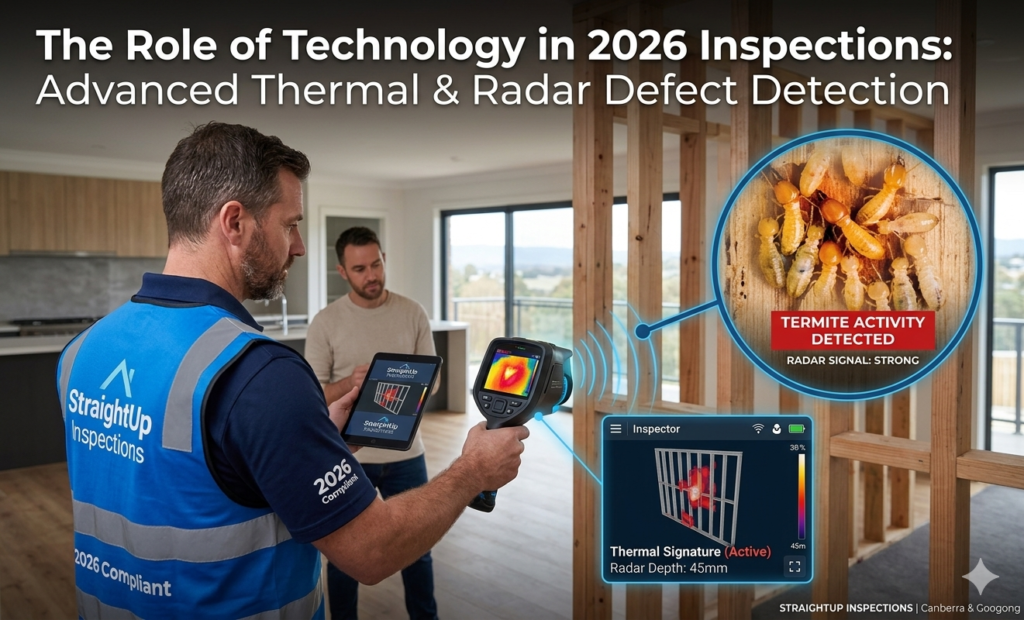
Thermal Imaging: This technology lets us see heat signatures. A cold spot in a wall might mean a hidden leak, while a hot spot could indicate an electrical fault or a large termite colony.
Moisture Meters: We use non-invasive moisture meters to check behind tiles in bathrooms and laundries. To ensure that waterproofing membranes haven’t failed.
Drones (For Roof Inspections): For steep or multi–story roofs in Canberra, we often use drone technology to inspect the chimney, flashings, and tiles without risking damage to the roof material.
Don’t Leave Your Property Sale to Chance!
Preparing your home is the first step, but getting a professional’s perspective is what closes the deal. Whether you are in the heart of Canberra or the growing community of Googong, ensuring your property meets the 2026 Australian building standards is crucial for a smooth transaction.
At StraightUp Inspections, we specialize in identifying hidden risks—from structural integrity concerns to early pest detection. Our expert team provides detailed, easy-to-read reports that give both sellers and buyers total peace of mind.
Secure your investment with the most trusted Building and Pest Inspection experts in the ACT region.

How Access Canberra Regulations Affect Your Commercial Fit-Out
Planning a commercial fit-out in the Australian Capital Territory (ACT)...
Read More
As-Built Surveys Canberra | Verifying Unapproved Structures
The Australian Capital Territory (ACT) property market operates within one...
Read More
Commercial Building Inspections | Comprehensive Asset Audits
Acquiring, managing, or leasing commercial real estate in the Australian...
Read More