The Australian Capital Territory (ACT) is still one of the most tightly controlled property markets in the country in 2026. The Mandatory Pre-Sale Disclosures have radically changed how homeowners in Canberra and Googong prepare for a sale. A building inspection is no longer a good idea, it’s a legal shield.
For sellers the name of the game is Risk Mitigation. Not disclosing a structural defect or history of termite activity can result in collapsed contracts, legal suits and huge financial penalties. This guide looks at how you can work around these laws while protecting your investment.
1: The Legal Framework (ACT Civil Law)
Under the Civil Law (Sale of Residential Property) Act, sellers have to provide a bundle of documents before a property can even be advertised.
The Disclosure Bundle: This includes the Crown Lease, Title Search and most importantly Building and Pest Inspection Report.
Unapproved Structures: Inspectors will be required to include specific comments on energy efficiency ratings (EER) and “Safe to Occupy” certifications under new regulations.
Liability Shift: The old rule was “Buyer Beware” (Caveat Emptor). Today, it is our burden to prove. If the seller knew about the defect and hid it, the buyer has a lot of legal recourse after settlement.
2: Identifying “Major Structural Defects” vs. Maintenance
StraightUp Inspections delivers a professional report that categorizes issues to help mitigate risk. The bottom line is, it is important to understand the difference.
A. Serious Structural Deficiencies
These are matters that influence the stability of the building.
Foundation Failure: Common in the reactive clay soils of Canberra. Roof integrity Rotten
structural timber or collapsed trusses.
Unpermitted Work: Home strength compromised by unapproved renovations.
B. Maintenance and Small Faults
Dripping taps, broken roof tiles or peeling paint.
Pro Tip: These are not deal-breakers but too many minor defects on a report cause a “Negative Perception” that gives buyers a reason to drive the price down.
3.Mitigating Invisible Risks: Subterranean Termites and Moisture Profiling
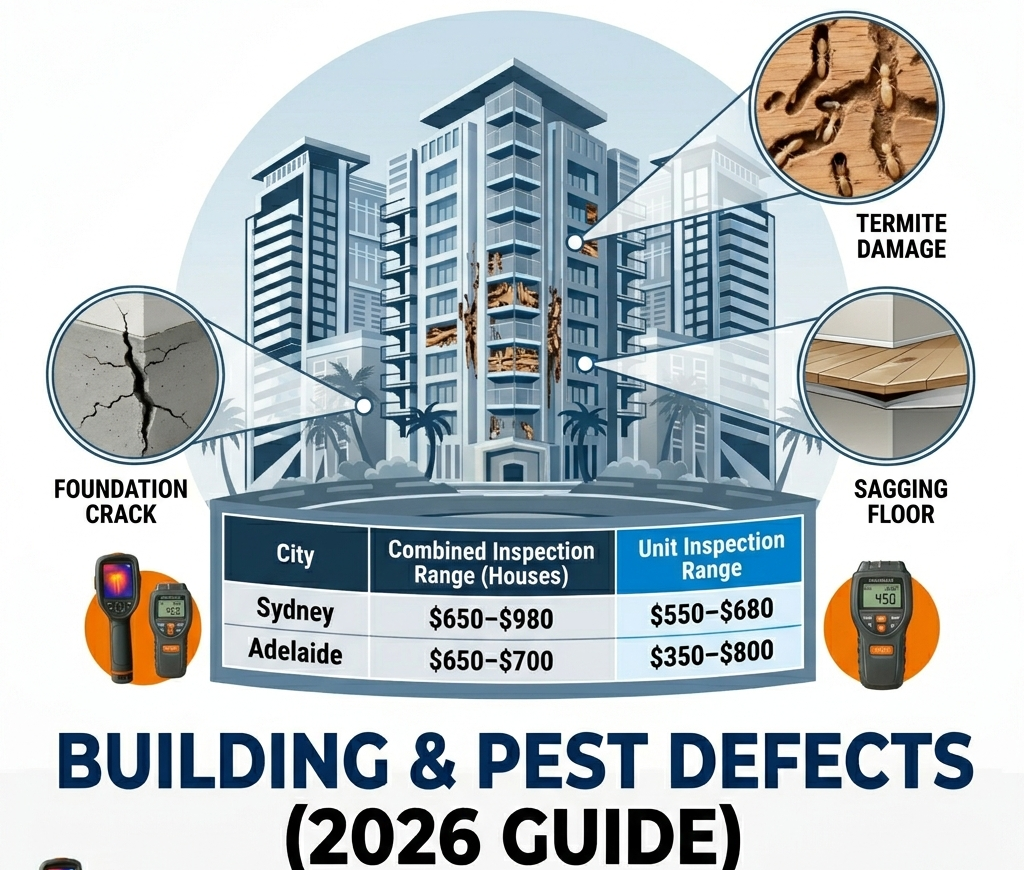
Subterranean termites and hidden water leaks are the biggest financial threats to property structural integrity in the Australian Capital Territory. In the competitive ACT property market, basic visual checks cannot detect these hidden defects. Termites easily breach concrete slabs through cracks as thin as , while pinhole pipe leaks pool moisture inside wall cavities completely unnoticed.
To eliminate post-sale litigation risks and protect your contract, StraightUp Inspections utilizes advanced diagnostic technology:
Moisture Profiling: Non-destructive moisture meters map dampness baselines across bathrooms, laundries, and kitchens to catch waterproofing failures before wood rot destroys structural framing.
Thermal Imaging Sweeps: Military-grade infrared thermography ( sensitivity) scans internal plasterboard and subfloors. Active termite nests and moisture pockets alter heat signatures, exposing hidden hazards instantly.
Including a certified timber pest assessment and detailed moisture profile in your ACT vendor disclosure bundle builds immediate trust. It gives buyers, auction bidders, and banks absolute confidence that the building complies with Australian Standards (AS 4349.1).
4: The Unapproved Structures Trap in Canberra & Googong Estates
One of the most common reasons property sales collapse at the auction line in the ACT is unapproved structures. Many older homes in Belconnen or Tuggeranong have DIY pergolas, carports, or wall modifications, while newer properties in Googong often feature uncertified retaining walls or decks. StraightUp Inspections cross-references your current property layout with the official ACT Government Building File. If a compliance gap is found, we don’t just flag it; we provide a compliance roadmap to help you secure a retroactive Building Approval (BA) or Certificate of Occupancy (COA) before buyers walk away.
Common unapproved structures that trigger severe legal complications include:
Atypical Extensions: Enclosed verandas, DIY pergolas, and structural carports built without proper approvals.
Substantial Earthworks: Retaining walls exceeding $1\text{m}$ in height that lack certified structural engineering specifications.
Habitable Conversions: Class 10a outbuildings (such as detached garages or sheds) converted into unapproved living spaces, studios, or granny flats without meeting Class 1a Building Code requirements.
Is Your ACT Property 100% Market-Ready?
Don’t let unapproved additions or hidden structural defects kill your auction momentum on game day. Protect your equity with an independent, solicitor-ready assessment.
Get a Professional Pre-Sale Inspection Today
5: Practical Steps to Reduce Risk in Your Sale
Pre-Inspection Audit: Hire StraightUp Inspections before calling the Real Estate Agent.
Full Access Policy: Make sure the inspector has access to the roof void and sub-floor. Something is Hiding is what buyers see when a mandatory report shows “No Access”.
Document Everything: Keep receipts for roof repairs, plumbing work, termite barriers. Maintenance is the best risk mitigation tool.
6: The Importance of Professional Indemnity
When you select an inspector you are buying their insurance.
StraightUp Inspections holds full Professional Indemnity Insurance. If a buyer decides to sue at a later date, our detailed, technical and legally compliant reports are the final word on the condition of the home at the time of sale.For your report to stand up in court, it needs to adhere to Australian Standard AS 4349.1. Otherwise, insurance companies will not provide coverage for the inspection work. The selection of an insured company ensures that your report:
Is based on objective criteria.
Highlights important defects and safety issues.
Complies with the documentation standards of ACT courts and tribunals.
7: Why a ‘No Access’ Clause on Your Report Kills Auction Momentum
When a mandatory pre-sale disclosure report contains a “No Access” clause, serious Canberra buyers immediately panic. Phrases like “Roof void restricted” or “Subfloor blocked” act as immediate red flags. Bidders instinctively assume the worst, completely killing your auction’s competitive momentum.
A restricted report damages your sale in three ways:
Breeds Suspicion: Buyers suspect hidden structural damage, sagging roof trusses, or active termite activity.
Lowers Bids: Bidders drop their maximum limits to factor in the financial risk of the unknown.
Stalls Finance: Banks often withhold unconditional loan approvals on inconclusive property reports.
True risk mitigation requires 100% transparency. Before our inspector arrives, ensure all manholes are cleared and crawl spaces are unlocked. StraightUp Inspections delivers a completely unobstructed, bulletproof report under Australian Standards (AS 4349.1), removing buyer hesitation and keeping bidders aggressive on auction day.
8: Energy Efficiency Ratings (EER) and Disclosure
The EER is a mandatory part of your pre-sale package in the ACT.
The Compliance Link: Structural issues (bad roof sealing or gaps in the foundation, for example) often have a direct impact on your EER.
Professional Tip: If you see gaps in insulation or window seals in your report, fix them before inspection to not only improve your structural report but possibly your EER, too.
9: Securing Auctions via Indemnity & Technical Reports
Most houses in Canberra are sold at auction. Every bidder looks at the mandatory report.
The “Clean” Report Benefit: A report without major defects is a green light for bidders, often raising the price.Dealing with Red Flags When our report highlights a concern, we provide you with the technical jargon necessary to articulate the Remediation Plan.
Risk mitigation isn’t just about the house, it’s about the paperwork.
Legal Validity of Reports: We create reports that are legally defensible.
Compliance with AS 4349.1: We strictly comply with Australian Standard 4349.1 which means that your mandatory disclosure will be recognised by all ACT financial and legal institutions.
10: Effect of Unapproved Structures on Sale Price
Unapproved Structures in the ACT are one of the most common reasons why a sale can stall or a bank may refuse a buyer’s mortgage.
The compliance gap: Many Canberra homeowners have built decks, pergolas or internal wall changes without applying for a Building Approval (BA).
Mandatory Disclosure: You must disclose whether structures have been approved. If our inspection identifies an unapproved structure, we don’t just ‘flag’ it, we provide technical advice as to whether it complies with the National Construction Code (NCC).
Risk Mitigation: If you see this before listing, you can get retrospective approval (COA) or a removal quote and avoid the last minute $20,000 price reduction during negotiations.
11: Boundary Compliance and Retaining Walls
In the sloping terrains of Googong, retaining walls are a vital structural component.
Structural Failures: A failing retaining wall is a major structural defect. If it’s over a certain height, it has to be certified by an engineer.
The Disclosure Risk: Failing boundary fences or retaining walls that are not disclosed can create disputes with neighbours that are inherited by the new buyer – and possibly litigated against you.
StraightUp Expertise: We evaluate drainage, weep holes and lean of retaining walls to ensure they are stable for the long haul.
12: Wet Area Characterisation and Moisture Profiling
Water damage is the ‘hidden cancer’ of Australian homes.
Non-invasive testing: We use high frequency moisture meters to test behind laundry cabinetry and bathroom tiles.
The Cost of Silence: A minor shower leak can cause floor joists to rot over time. Better to reveal a “minor leak” than to be sued for a “rotted foundation” later.
Technical Reporting: We offer a moisture map of wet areas to give buyers the confidence that the home’s “wet zones” are sealed and secure.
13: “StraightUp” Pre-Auction Approach for Sellers
The way you offer the mandatory report to the bidders can influence the result of your auction.
Build Trust With Transparency: We suggest that you place the whole report on the kitchen bench at each open home inspection.
Q&A Assistance: If an interested buyer needs any information regarding our report, we are available to help him/her. This creates trust and eliminates any fear of the unknown, thus leading to better bids.
Market Trends for Googong,Canberra: In 2026, buyers are very informed. They seek the StraightUp Inspections logo since they understand that the problems have not been “sugar-coated.”
14: Post-Inspection Assistance
Our work does not end with just clicking on send for the PDF.
The “Red Flag Issues”: For each potential problem that arises, we assess its significance. Every crack may not necessarily be a cause for concern.
Unbiased Professional Opinion: We are completely impartial and independent. We do not undertake the remedial works ourselves and thus offer completely unbiased Risk Mitigation advice.
Priority 1: Moisture penetration in wet areas or termite bridges. This issue should be correct right away to prevent future damage.
Priority 2: Unauthorized structures or small roof leaks. Addressing these issues needs to take place prior to completing the mandatory disclosure.
Priority 3: Small cracks or outdated fixtures. Sometimes, this issue can be handle as is, provided that full disclosure takes place.
15: The Value of Digital Expert Reporting
The best risk mitigation occurs when the inspection done through an independent third party.
Conflict of Interest: In the year 2026, transparency rules everything. Employing an independent company such as StraightUp Inspections instead of that recommended by the buyer’s agent guarantees impartiality.
Legal Standing: If there is ever a case before the ACT Civil and Administrative Tribunal (ACAT), then an independent and technical inspection report holds far more weight than a quick-checklist.
In the world of modern property buying, technology rules the roost.
Cloud Reporting: Our reports are offere in a high-quality digital format that can instantly share with your solicitor, agent, and potential purchasers.
History Report: We store your property inspection reports in a secure archive. This can come in handy for proof of the state of the house before a certain weather event or renovation.
16: Preparation for post-inspection negotiations
The report can use in negotiations.
Language Style: The language used in our reports is professional. There are no “scare tactics”, just technical facts.
The Valuation Connection: Your valuer will make an objective appraisal because he/she doesn’t need to guess about the state of the sub-floor or roof space. A professional structural inspection can confirm that objective appraisal.
17: Compliance Audits & Post-Inspection Negotiations
Before you put up “For Sale” sign in Googong, have final walk through using our recommendations.
Verification: Make sure all the “small fixes” from our draft report are done.
Psychological Power Play: Coming to auction with a house where everything we recommend to fix has fix will give you an enormous edge.
Protect Your Equity Before Listing Your ACT Property
Don’t let an inaccurate or unverified report delay your settlement or lead to expensive legal disputes after the gavel falls. Ensure your ACT vendor disclosure package is 100% compliant, independent, and legally defensible under AS 4349.1.
Request a Solicitor-Ready Pre-Sale Inspection

How Access Canberra Regulations Affect Your Commercial Fit-Out
Planning a commercial fit-out in the Australian Capital Territory (ACT)...
Read More
As-Built Surveys Canberra | Verifying Unapproved Structures
The Australian Capital Territory (ACT) property market operates within one...
Read More
Commercial Building Inspections | Comprehensive Asset Audits
Acquiring, managing, or leasing commercial real estate in the Australian...
Read More